Inventory & Purchasing — in depth
Disconnected inventory creates missed installs, rushed orders, and expensive mistakes.
Auto glass inventory is not simple retail inventory. A windshield may be tied to a specific vehicle build, feature set, supplier part, molding, adhesive requirement, calibration workflow, and scheduled technician. If the part is not available when the job begins, the entire operation slows down.
Spreadsheets and generic inventory tools usually separate stock from quoting, scheduling, purchasing, receiving, and billing. That separation forces the team to verify everything manually: whether the right part was selected, whether it is in stock, whether it was already promised to another job, whether a purchase order was placed, and whether the part was received in time.
Parts appear available but are already needed for another job.
Track the materials that matter to real auto glass work.
Glassio inventory is designed for the way auto glass companies manage operational materials. The system can organize glass parts, moldings, clips, adhesives, urethane, primers, tools, consumables, supplier part references, stocking locations, and job-related usage.
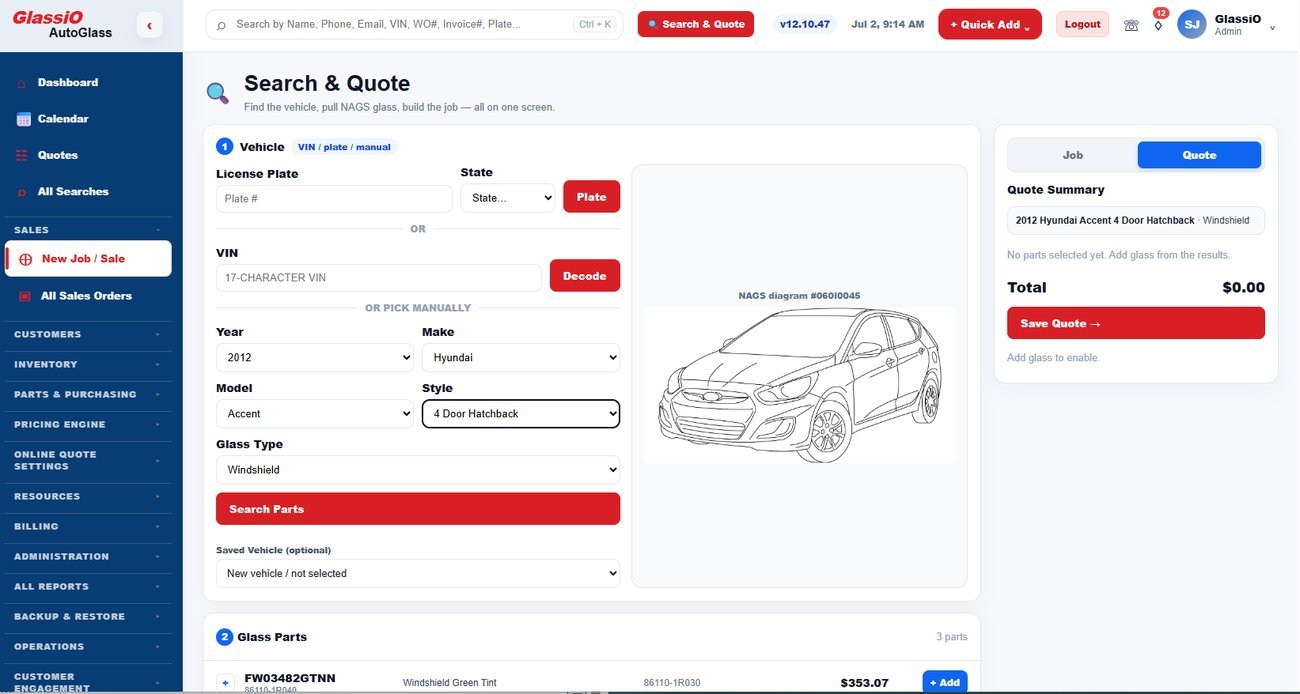
Instead of treating every item as a generic SKU, Glassio supports inventory views that make sense to auto glass teams: part numbers, categories, supplier references, locations, cost, availability, reserved quantity, reorder needs, and job connection.
Glass parts
Windshields, door glass, back glass, quarter glass, vent glass, and other job-critical items.
Moldings and clips
Related materials that can delay installation when not planned with the glass part.
Adhesives and consumables
Urethane, primers, cleaners, tape, blades, and install materials tied to job readiness.
Supplier references
Supplier item numbers, purchase cost, vendor availability, and ordering context where integrations are available.
Locations and movements
Shop stock, mobile stock, receiving, transfers, returns, and usage history.
Operational alerts
Low stock, reserved stock, unreceived POs, pending supplier orders, and missing materials.
Reserve inventory for the jobs that already need it.
A part that is on the shelf is not always available. It may already be needed for tomorrow morning, assigned to a mobile installer, waiting for calibration workflow review, or planned for a customer appointment. Glassio is designed to help shops connect inventory availability to actual job demand.
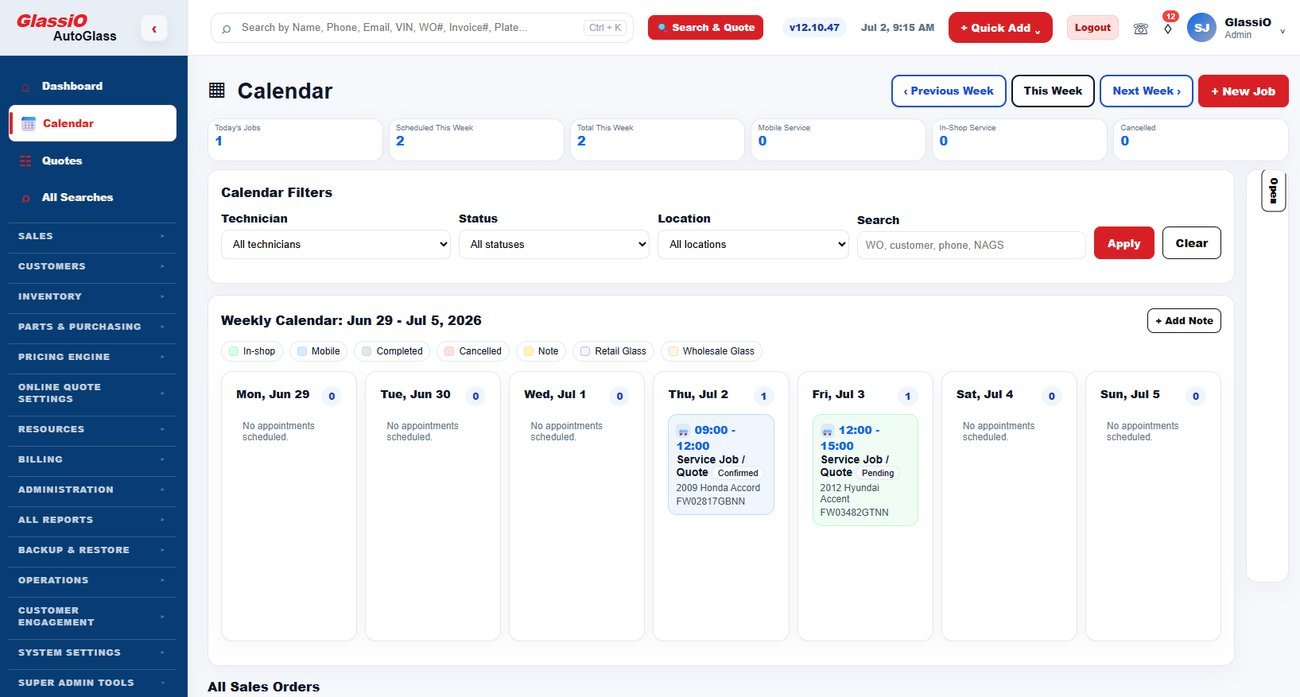
Job-aware reservations give managers a clearer view of what can truly be sold, what should be protected for scheduled work, and what must be ordered before the install date. This is a major difference between a basic inventory list and an auto glass operating system.
Reserve glass and related materials against a quote, service order, or scheduled job.
Turn operational demand into purchase orders without losing context.
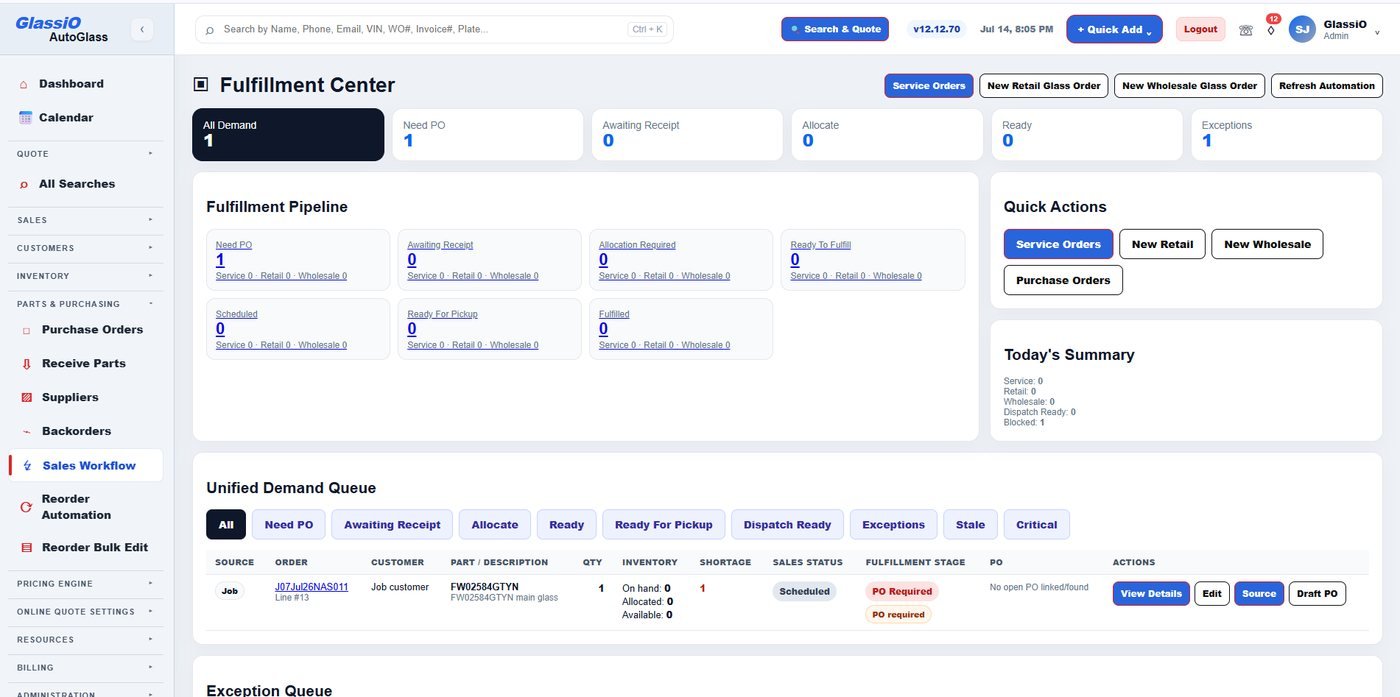
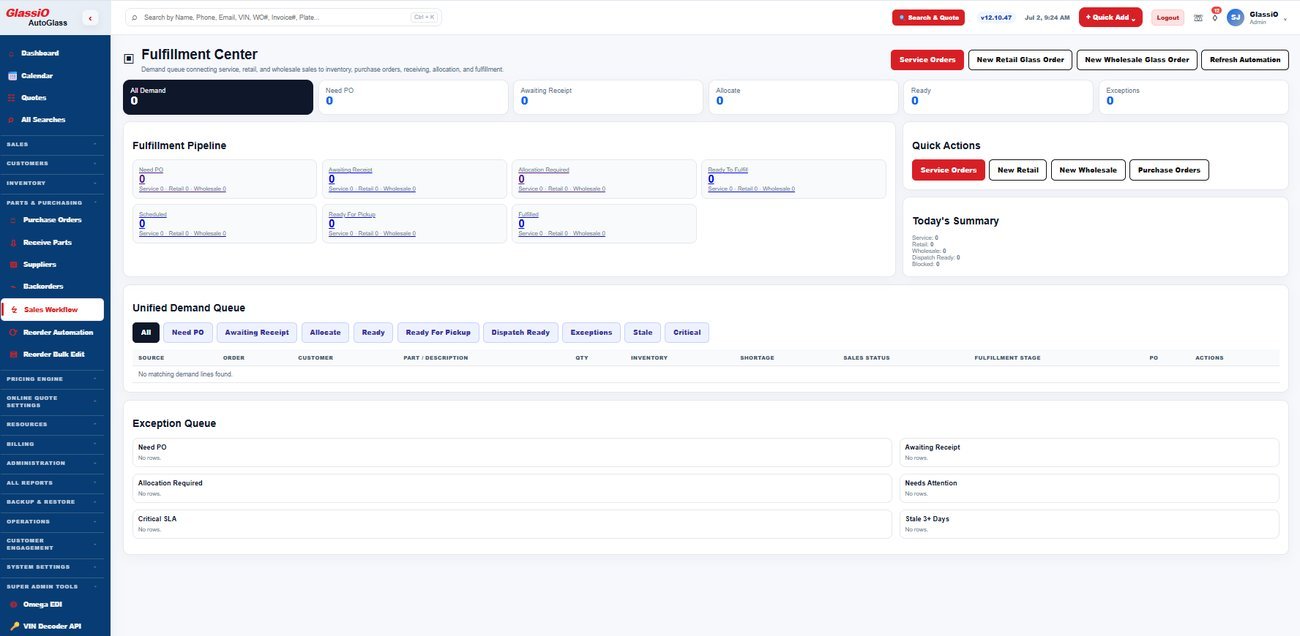
Purchasing should not start after a job is already at risk. Glassio is designed to help teams see what needs to be ordered, connect purchase orders to suppliers, track receiving status, and keep job context visible throughout the process.
When inventory, job scheduling, and supplier activity live in the same operating system, the team has a better chance of ordering the right item, for the right job, at the right time.
Identify demand
Quotes, scheduled jobs, low stock alerts, and reservations reveal what needs attention.
Create purchase order
The purchasing user can build a PO with supplier, item, quantity, cost, and job context.
Track supplier status
Open, submitted, partially received, backordered, cancelled, or completed statuses keep the team aligned.
Receive and update stock
Received items update inventory and can move jobs from at-risk to ready.
Report and reconcile
Purchasing cost, usage, and supplier activity feed operational reporting.
Connect supplier workflows to quoting, inventory, and purchasing.
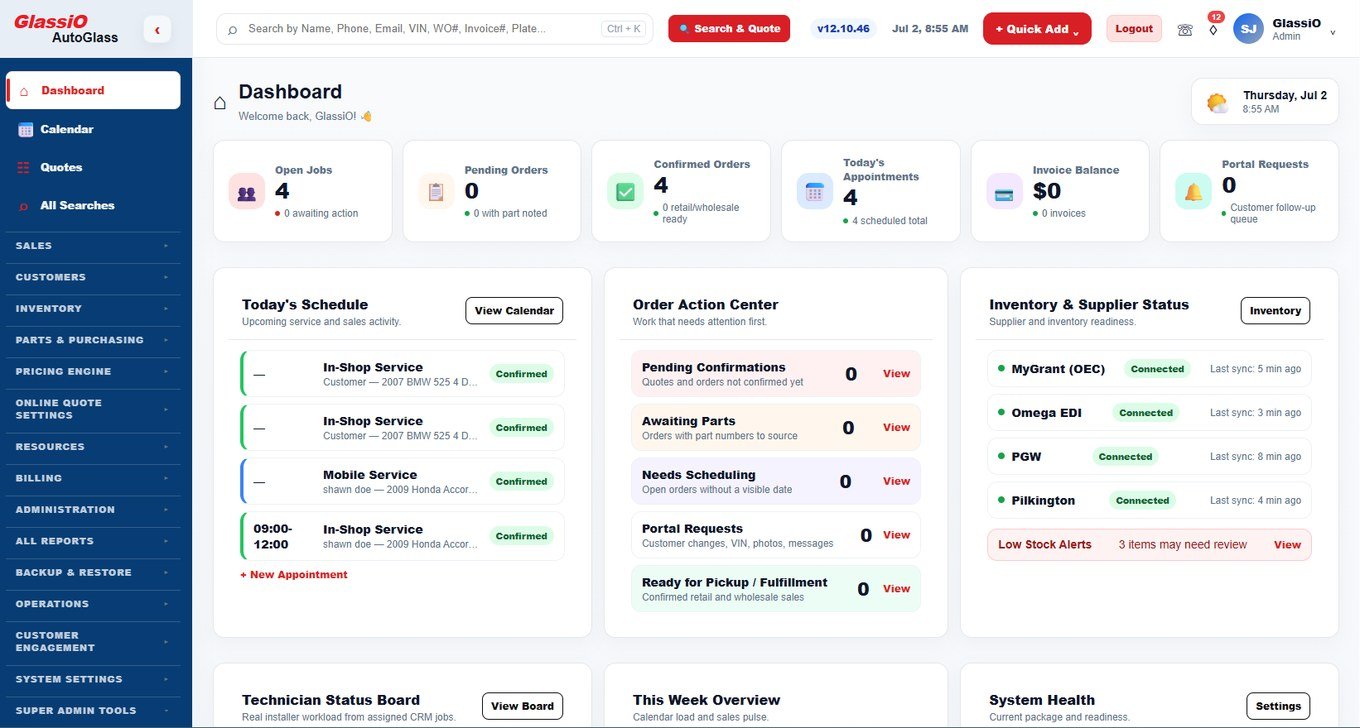
Glassio is designed around the supplier relationships auto glass businesses already use. Supplier connectivity can support better visibility across item lookup, cost context, purchase activity, ordering workflows, and inventory decisions.
The current supplier focus includes Mygrant, PGW, and Pilkington workflows, with the platform architecture designed to support additional supplier connections as the network grows.
Bring supplier context closer to the quote and service order workflow.
See the inventory signals that affect profitability and job readiness.
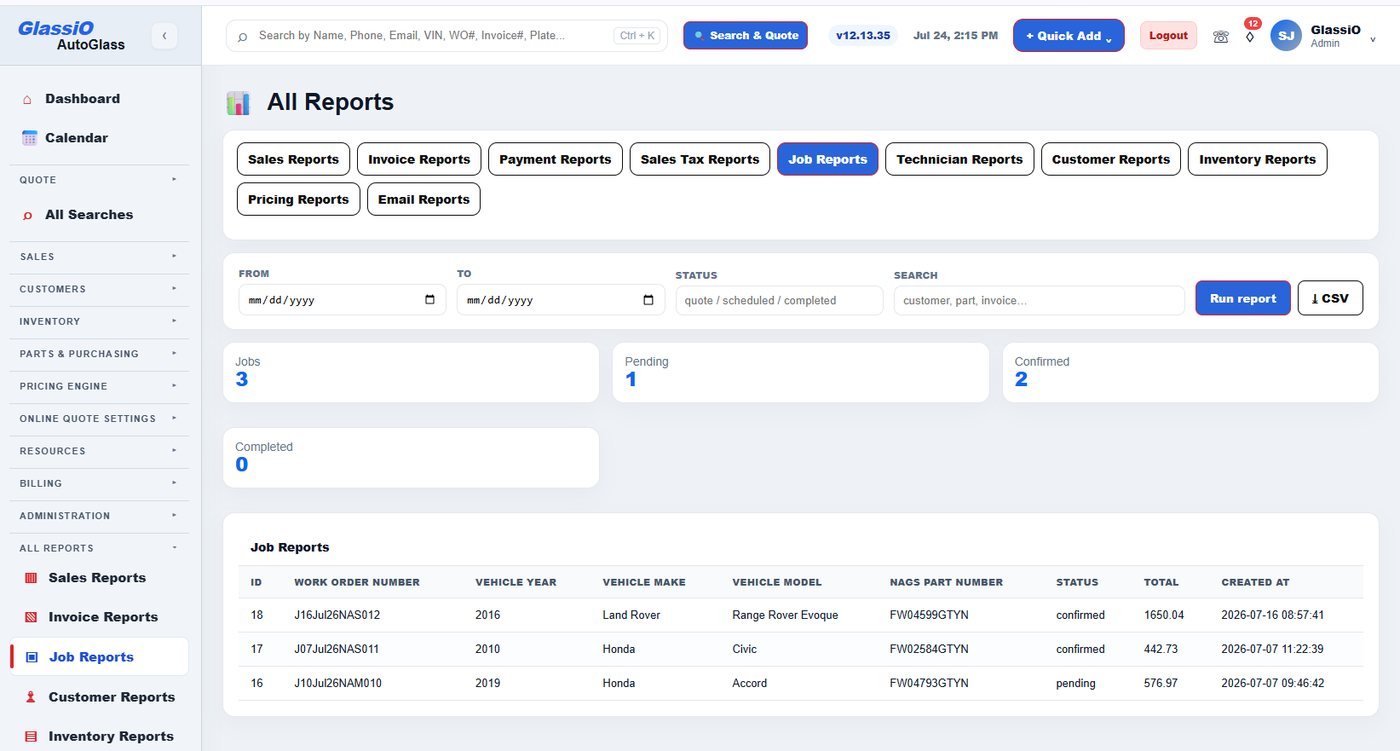
Inventory reporting should help managers make faster operational decisions. Glassio inventory reporting can surface usage patterns, low-stock items, purchasing activity, reserved inventory, received inventory, job readiness risk, supplier activity, and cost visibility.
For growing shops and multi-location operators, this visibility helps reduce waste, prevent job delays, and identify which inventory categories are moving, sitting, or repeatedly causing operational friction.
Available vs. reserved
Separate what is physically in stock from what is truly available to sell.
Open purchasing
View submitted, partial, and pending purchase orders.
Low stock alerts
Identify items approaching reorder thresholds.
Usage trends
Understand which materials and part categories are being consumed.
Job readiness risk
Find jobs missing needed materials before installation day.
Supplier activity
Review supplier demand, cost context, and fulfillment patterns.
Common questions
Is Glassio inventory only for large shops?
No. Glassio is designed to support different levels of inventory complexity. A mobile installer may use simple job materials and supplier ordering workflows, while a shop or distributor may use deeper stock, purchasing, receiving, and reporting workflows.
What makes Glassio inventory different from a spreadsheet?
A spreadsheet can list items, but it does not naturally connect inventory to vehicle intelligence, quotes, scheduled jobs, reservations, purchase orders, receiving, supplier activity, and billing. Glassio is designed to connect those workflows.
Can inventory be reserved for a job?
Yes. Job-aware reservations are a core positioning point for Glassio. The goal is to separate stock that is physically present from stock that is actually available after scheduled job demand is considered.
Does Glassio connect with suppliers?
Glassio is designed around supplier connectivity and currently focuses on workflows involving Mygrant, PGW, and Pilkington. Exact capabilities may depend on supplier access, account credentials, market, and tenant configuration.
Can distributors use this page as a reason to explore Glassio?
Yes. The page should route distributor buyers to the Distributors solution page because purchasing, inventory visibility, stock movement, and reporting are especially relevant to distribution workflows.
Does Glassio replace accounting software?
No. Glassio supports operational inventory and purchasing workflows and can connect billing and reporting context. Accounting workflows should be positioned through integration or export where supported.